The press does not see the original artwork. It does not know what the designer intended, what the brand approved, or what the customer expects.
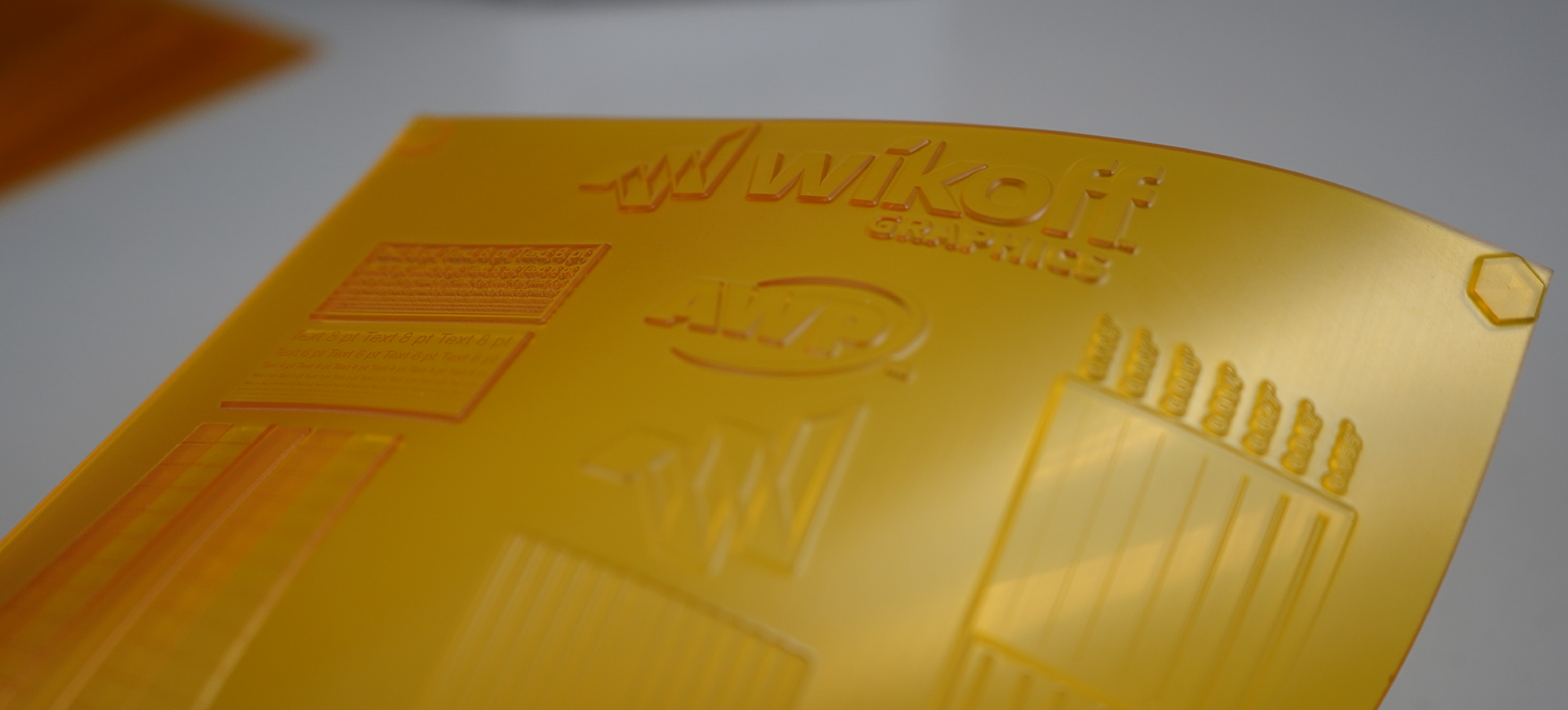
The press sees a plate.
That plate carries every decision made upstream – from artwork and screening through imaging, processing, mounting, and press setup. By the time a problem appears on press, its real cause may have been introduced hours, days, or even weeks earlier.
A color looks weak, so the operator adjusts the ink. Highlights begin filling in, so impression is changed. The press stops repeatedly for plate cleaning, so viscosity, drying, and ink transfer are investigated.
Those are all reasonable places to look. But they may not be where the problem started.
That is why plate performance should never be viewed as simply a material decision. It is the result of a complete system.
Different Operations Require Different Solutions
There is no single plate, processing method, or workflow that is right for every flexographic printer.
A narrow-web label converter running frequent job changes has different priorities from a wide-web flexible-packaging operation producing long runs at high speeds. A trade shop manufacturing plates for dozens of customers faces different challenges from a national converter trying to standardize performance across multiple plants.
The right solution must account for the application, press, ink system, substrate, graphics, processing equipment, production volume, operator experience, and business objectives.
This is especially important when discussing solvent and water-wash platemaking.
Asahi is widely recognized for its leadership in water-wash technology. That recognition is well deserved, but it represents only one part of the Asahi plate portfolio.
The North American flexographic industry continues to operate a substantial installed base of solvent-processing equipment. These systems support trade shops, label converters, flexible-packaging operations, corrugated printers, and some of the largest converting businesses in the market.
For these companies, improving plate performance does not necessarily require replacing an established platemaking process.
Solvent Platemaking Remains a Major Performance Opportunity
Modern solvent-wash plates offer converters an immediate path to better performance using equipment and workflows they already understand.
Asahi’s AFP solvent-wash portfolio is engineered to deliver high print quality, predictable plate behavior, and improved press productivity across demanding flexographic applications. Select technologies also incorporate Asahi CleanPrint performance.
CleanPrint is not a coating applied to the surface of the plate. The performance is engineered into the photopolymer chemistry itself. By promoting more effective ink release, the plate can remain cleaner during production, helping reduce ink build-up and unnecessary press interruptions.
For the converter, that can mean more consistent printing and fewer stops for plate cleaning. For the trade shop, it creates an opportunity to offer customers a meaningful performance improvement without asking them to completely change how their plates are produced.
This is an important distinction.
Solvent platemaking should not automatically be treated as yesterday’s technology. For a large part of the North American market, it remains the established manufacturing platform, and one with significant room for technical and operational improvement.
Water-wash technology offers another compelling route, particularly when sustainability, reduced processing time, dimensional stability, and the elimination of solvent washout are priorities. The decision should not be framed as solvent versus water wash.
It should be framed around selecting the best technology for the customer’s operation today while creating a practical path for tomorrow.
The Plate Cannot Perform Alone
Even the right plate cannot compensate for every other variable in the process.
Mounting tape, for example, has a direct influence on print quality and press behavior. Cushion hardness affects the reproduction of screens, combination work, and solids. Adhesion must be appropriate for the plate, sleeve or cylinder, job length, and operating conditions.
A tape that is too soft, too firm, or incorrectly matched to the application can contribute to dot gain, bounce, poor solids, lifting, registration issues, and inconsistent print.
That is why ORAFLEX mounting tapes are an important part of the Wikoff Graphics approach. The ORAFLEX portfolio includes solutions for wide-web applications as well as tapes designed for narrow-web label and specialty printing.
The objective is not simply to sell a roll of tape alongside a box of plates. It is to understand how the plate and tape work together – and how that combination will behave on the customer’s press.
Artwork, workflow, imaging, plate material, processing conditions, mounting tape, ink, anilox selection, impression, and operator practices all contribute to the final result.
Change one part of that system and the others may respond.
Support Must Continue After the Sale
Product selection is only the beginning of a successful conversion.
Customers need help evaluating the opportunity, establishing a performance baseline, conducting meaningful trials, and understanding the results. Once a solution is selected, they may need assistance with implementation, equipment, workflow, operator training, preventative maintenance, and ongoing process optimization.
This is where local technical capability becomes critical.
A converter should have confidence that support will be available before, during, and after adoption. A trade shop should know it has a technical partner capable of helping solve difficult customer applications. A national operation should be able to work toward consistent standards across plants without ignoring the different equipment and production realities at each location.
Wikoff Graphics is building that complete support structure.
Our broader Wikoff sales organization remains close to the customer and understands the relationship. The Graphics team brings specialized commercial, platemaking, workflow, application, production, and field-service expertise. Our technology partners add another level of product and engineering support when required.
One customer. One coordinated supporting team.
Helping Trade Shops and Converters Grow Together
Trade shops remain an essential part of the flexographic industry.
For converters that outsource plate production, a strong trade-shop relationship provides expertise, capacity, technology access, and dependable plate supply without the investment required to establish an internal plate room.
Our strategy is to support and strengthen those relationships.
By working with qualified trade shops, Wikoff Graphics can help bring Asahi technology to more converters while giving trade-shop partners additional technical, commercial, and service resources.
For converters making plates internally – or considering bringing platemaking in-house, the opportunity is broader. Plate materials, imaging, processing, workflow, cutting, mounting, training, and equipment service must come together as one implementation strategy.
For larger regional and national converters, the conversation expands again. Success may require multi-site testing, common specifications, coordinated training, preventative-maintenance programs, and a long-term technology roadmap.
The products matter. But the ecosystem surrounding those products is what gives customers the confidence to adopt and scale them.
Better Printing Begins Before the Press Starts
When a print problem appears, the pressroom will always be the first place people look. It is where the issue becomes visible.
But the most effective solution may be found much further upstream.
Better flexographic printing begins by connecting the decisions made in design, prepress, platemaking, mounting, and the pressroom. It requires materials, equipment, processes, and people to operate as a coordinated system.
The question is not simply, “Which plate should we buy?”
The better question is:
“What combination of technology, workflow, and support will help us print more consistently, operate more efficiently, and build a stronger platform for the future?”
This is the conversation Wikoff Graphics is ready to have.